 KURENIVKA
Highlights
The year at a glance. Tap a moment to read its part of the story.
A camp of our own
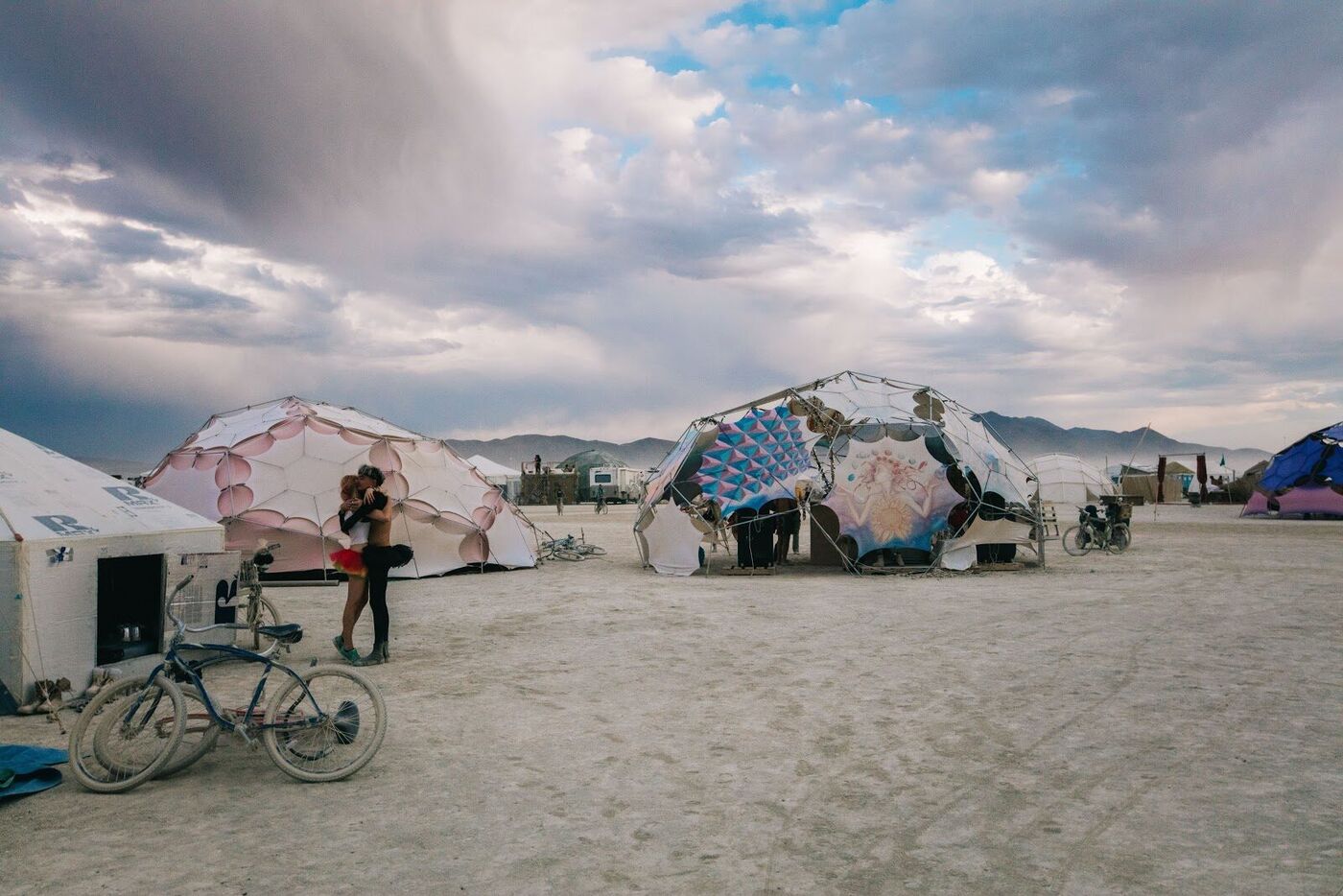
Eighty Ukrainians build Kurenivka on the playa for the first time.
Two domes
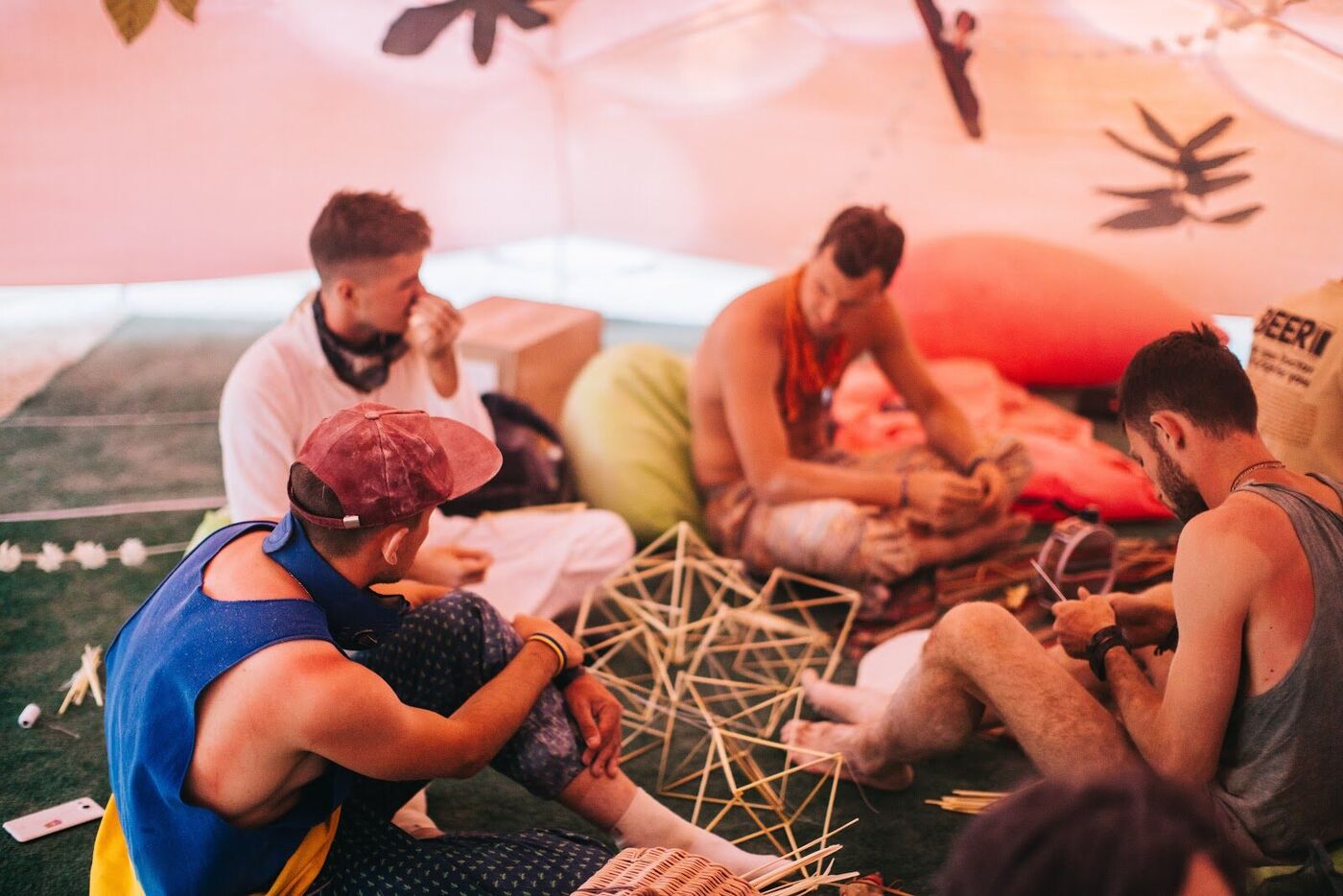
A closed lounge for the dust storms and a round pink bar.
160 litres of nastoyka
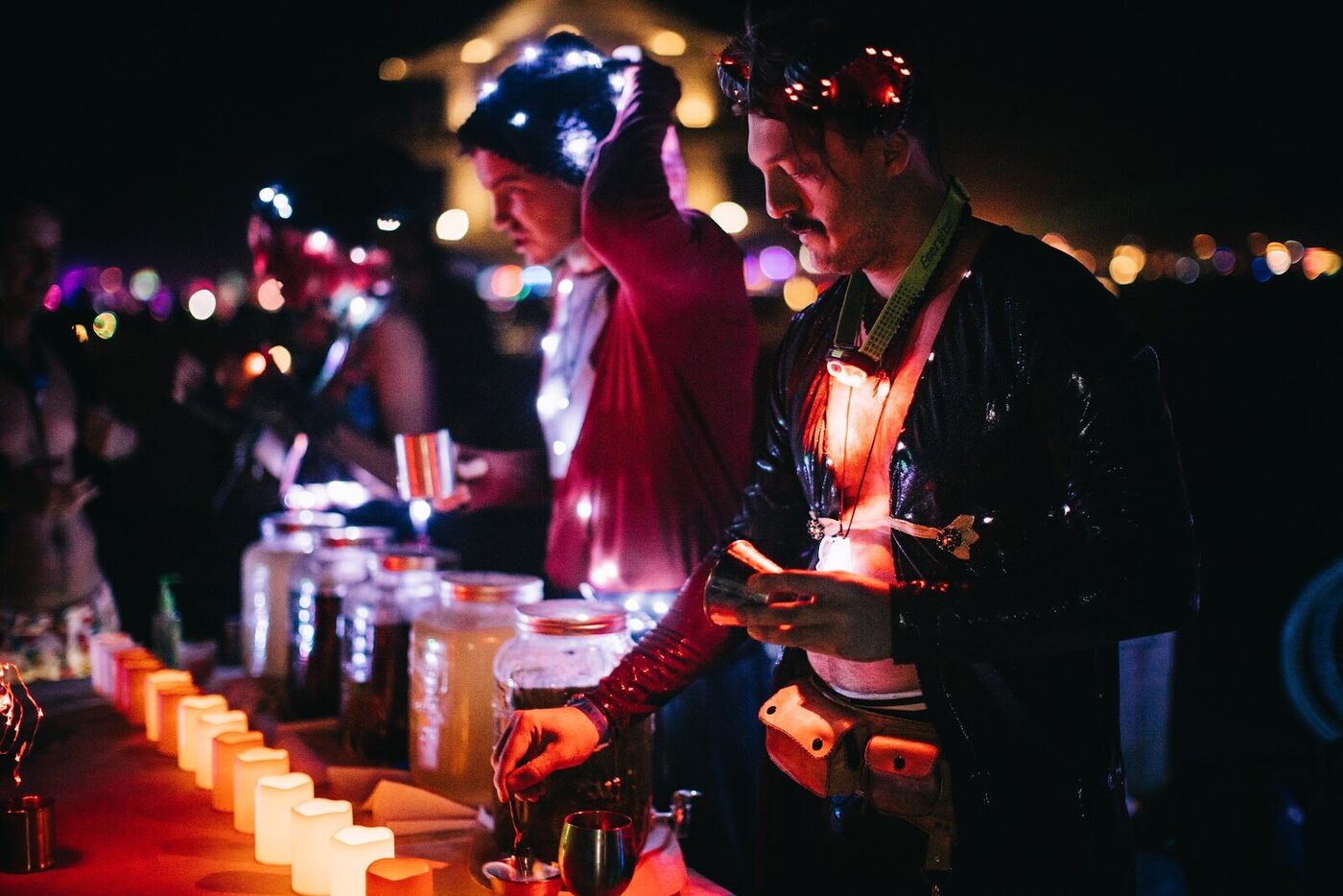
Homemade, carried two bottles to a suitcase, poured every night.
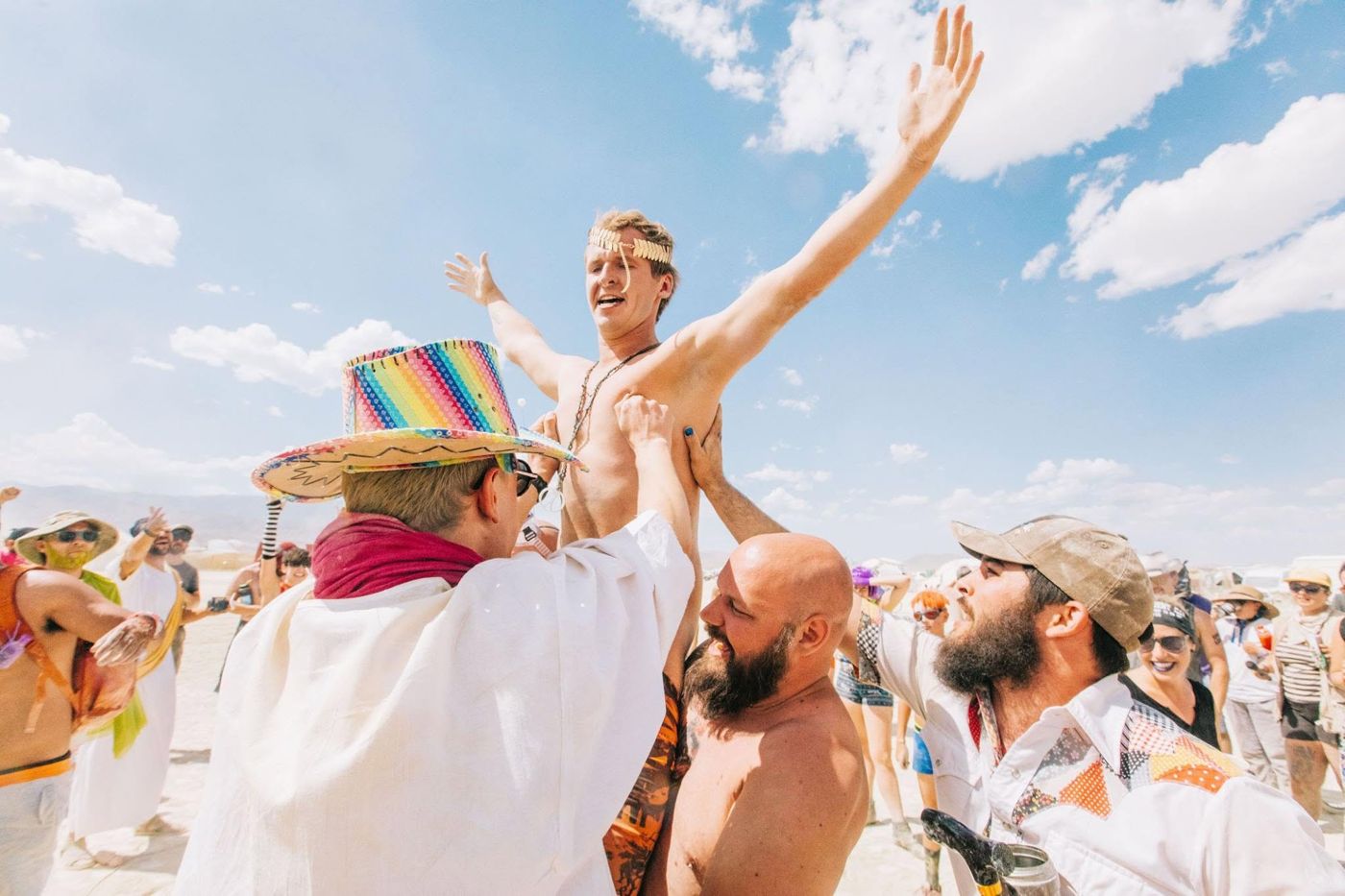
Female Ritual
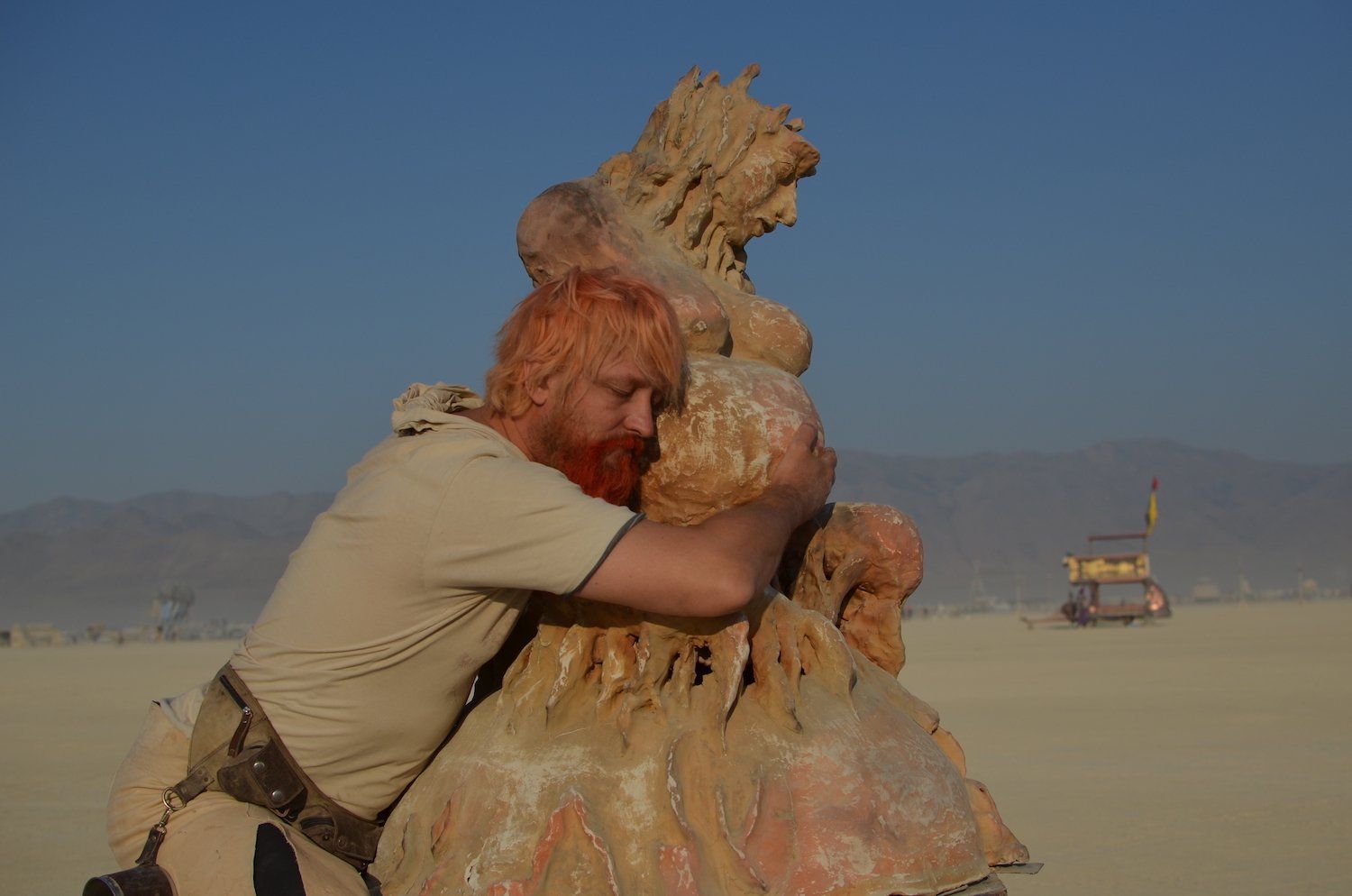
A life-size clay figure by Slava Gudenok, made in three days on the playa.
“What if there was a whole camp of us?”
The idea was born at someone else’s camp. In 2016, on his second Burning Man, Yaro was camping with Broken Angels Bathhouse, a small American camp in the French Quarter. Three or four Ukrainians there became friends and spent the week on shared adventures, and the question kept coming back.
Back in Kyiv he told Ella. She said yes. The first friend he called was Yarik Mamay: “Let’s do it.” Then Oleksii Novikov. One autumn evening, around Yaro’s kitchen table, they argued it out. Varenyky? No. A bar with Ukrainian nastoyky? Yes. And the theme would be Ukraine itself, at a time when no camp on the playa had ever been built around a country. Oleksii gave it a name: Kurenivka.
-
Broken Angels Bathhouse, French Quarter. The idea.
-
Ella, Mamay, Novikov say yes. A name: Kurenivka.
-
A Burning Man talk in Kyiv fills the room to the aisles. Sasha Ovsianko joins.
-
About 60 people have filled in the sign-up form.
-
Black Rock City. The build begins.
80
campers: about 60 from Kyiv, 20 from Dnipro
20
hexayurts, built in two weeks
2
domes: a lounge and a round bar
160 L
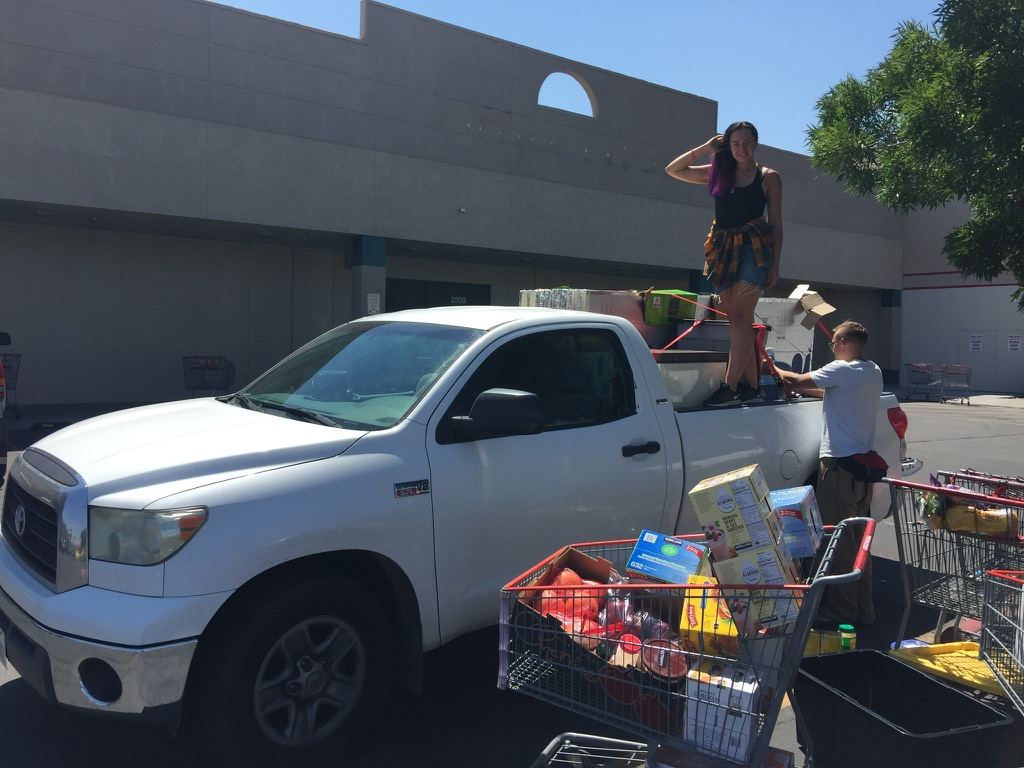
of homemade nastoyka, two bottles in every suitcase
Three veterans, eighty first-timers
Yaro and Ella first stepped into the dust of Black Rock City in 2013. In 2016 Yaro told Ella he wanted to build a Ukrainian camp there, and she was in at once.
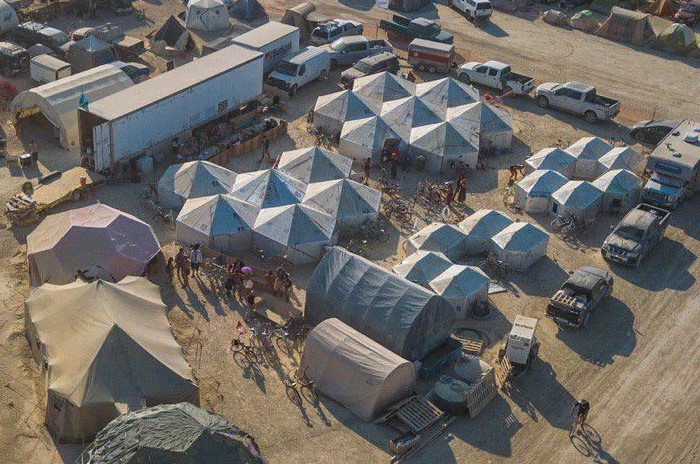
Mamay was the first to say yes, and he drew up the first budget. At the first meeting, in January 2017, about fifty people turned up wanting in. They split into architectural, creative and interactive teams, and Yaro alone spent some five hundred hours learning, planning and drawing an illustrated map of the camp: yurts, kitchen, food storage, trash, clean and grey water, generators, showers, a lounge for breakfasts and dinners, an interactive zone and a bar, with food for eighty people for eight days.
Of the people who went in 2017, only three had been to Burning Man before; eighty were going for the first time. So the camp prepared them properly: meetings, lectures, a party and a two-day trip outdoors, so that everyone arrived knowing the principles and ready for the desert.
Harder than anyone planned
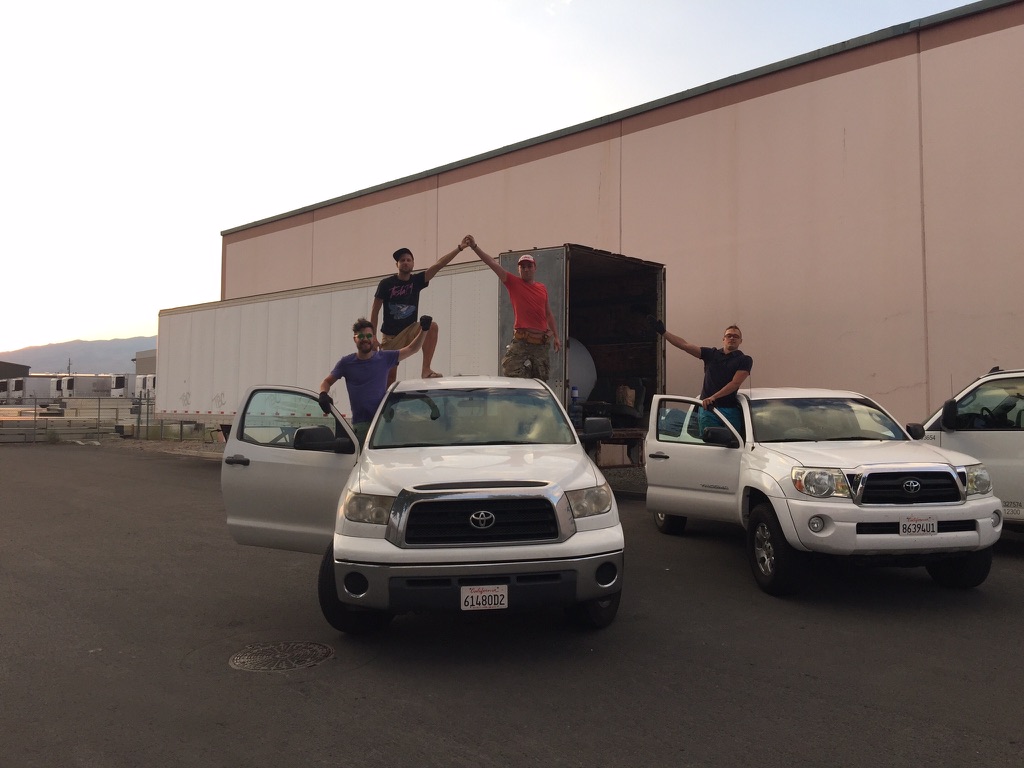
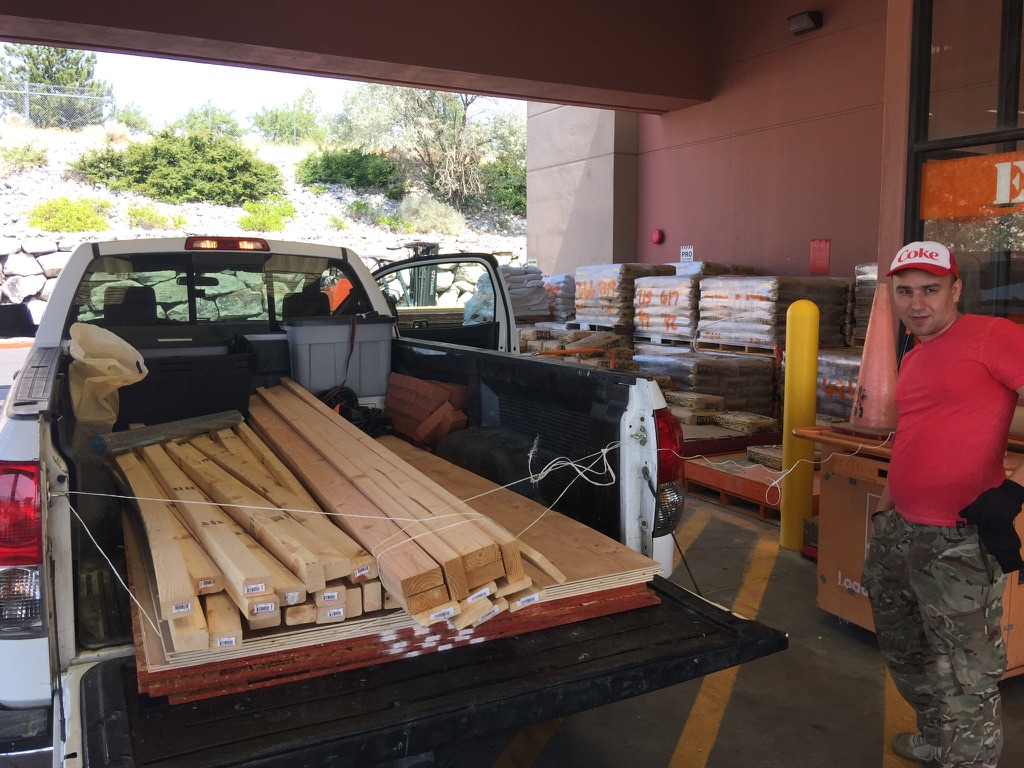
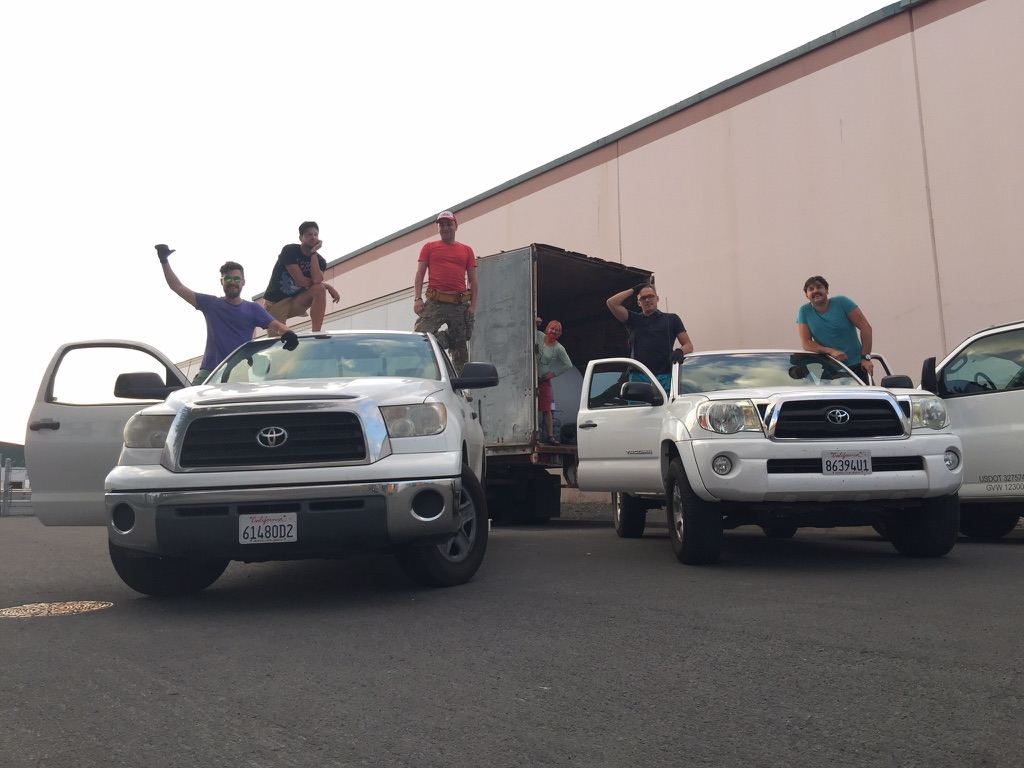
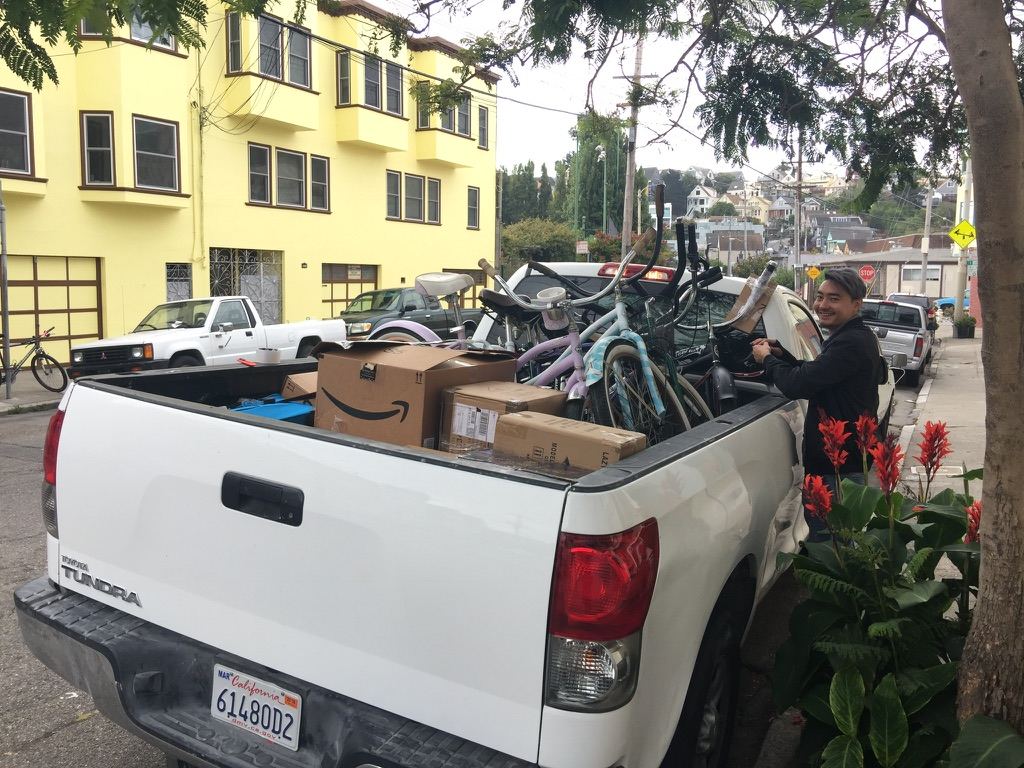
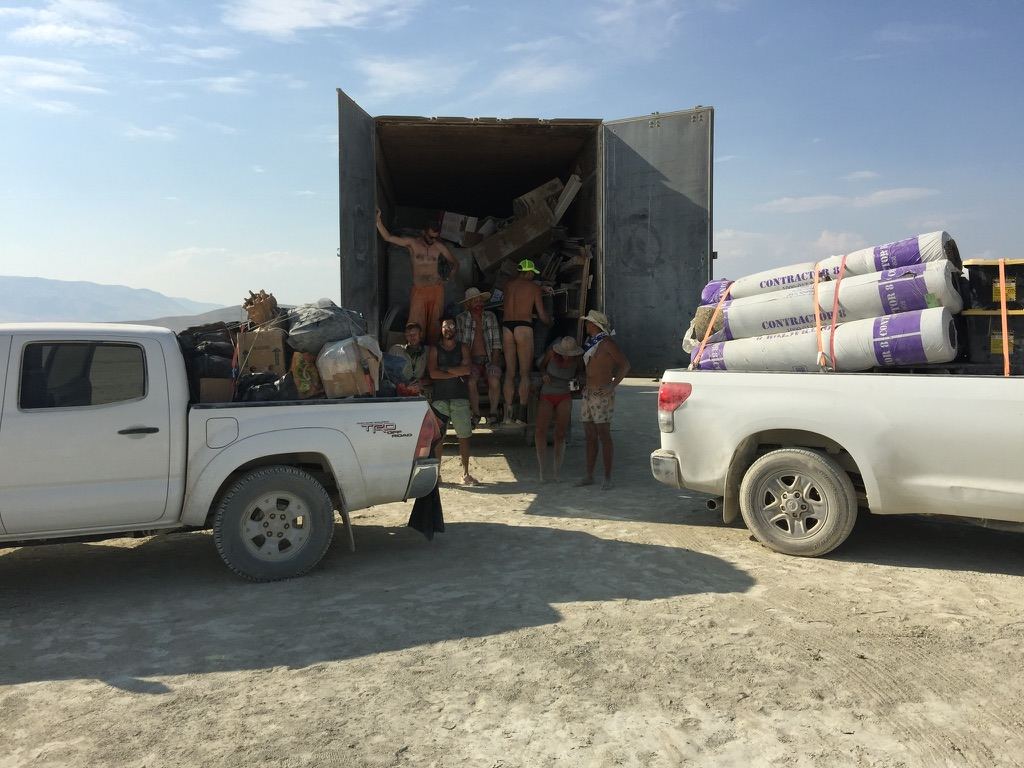
The build crew landed two weeks before the gates opened. A week of hardware stores and lumber yards in the US, then the desert: twenty hexayurts, kitchen, shade, and a hundred pieces of flat-pack plywood furniture that Ros Rusakov put together. That furniture is still standing ten years later.
Nobody had guessed how heavy it would be, physically and emotionally. It was the first lesson the camp would keep relearning: the burn starts long before the Man.
Two domes and a colour that chooses your drink
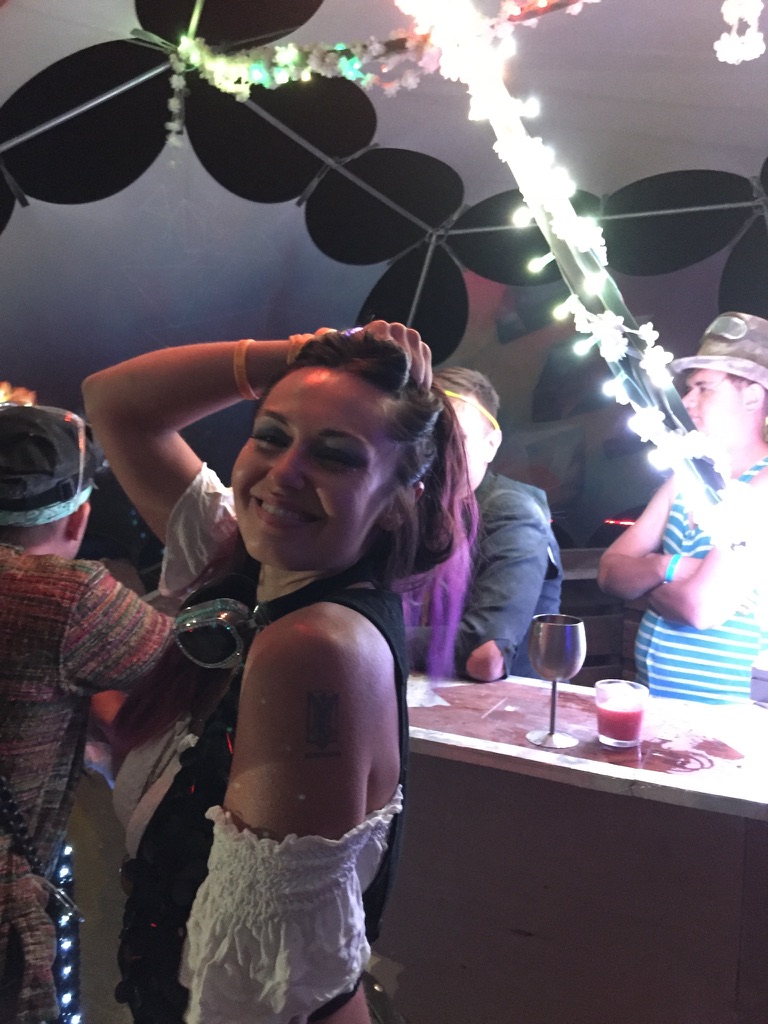
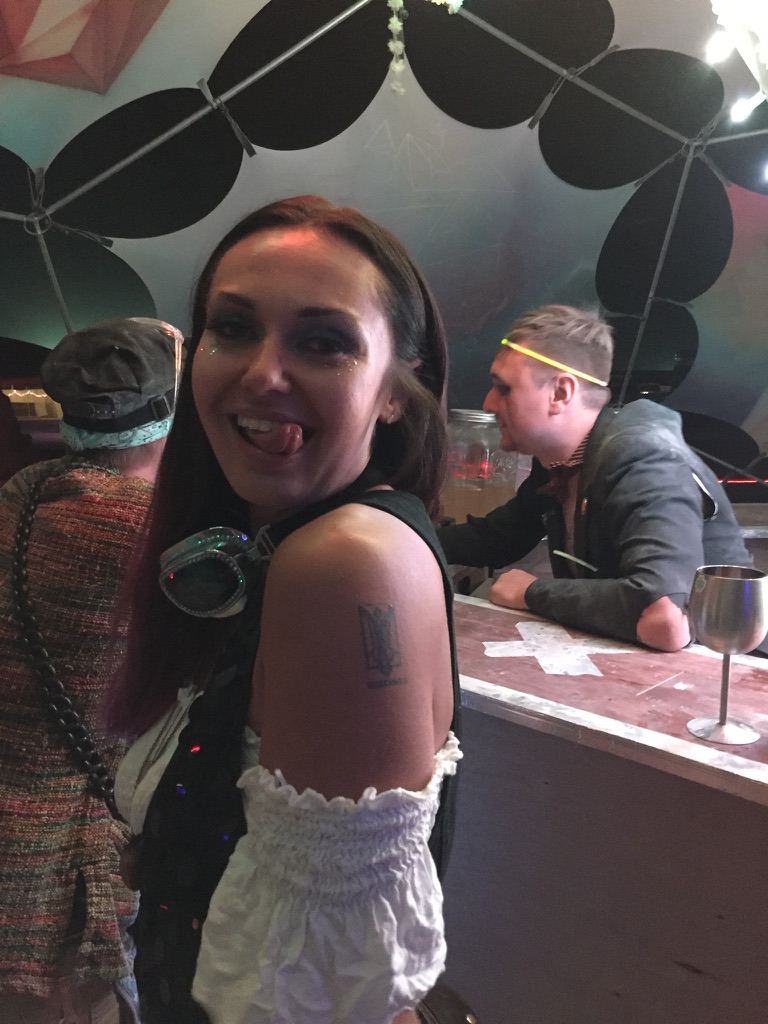
For a theme camp, the lounge is the art: it’s where you host. Kurenivka built two geodesic domes, their canvas painted by artist Oleksandra Stepanenko. One was a closed lounge to hide from the dust storms. The other was a round bar with a round counter.
Ella decided the bar would be pink. Inside, illustrations by Ukrainian artists were printed on fabric, cut out and tied to the canvas in a mosaic. At the counter you pressed a button, the lights shimmered and settled on one colour, and the colour chose your drink. Green meant absinthe.
At the heart of the camp was its own Maidan: a dance floor, the lounge and the Nastoyanka bar. The year’s theme was Radical Ritual, and Kurenivka brought four Ukrainian ones: making motanka dolls, weaving a straw pavuk, the Christmas amulet, brewing and drinking traditional potions, and burning a clay sculpture.
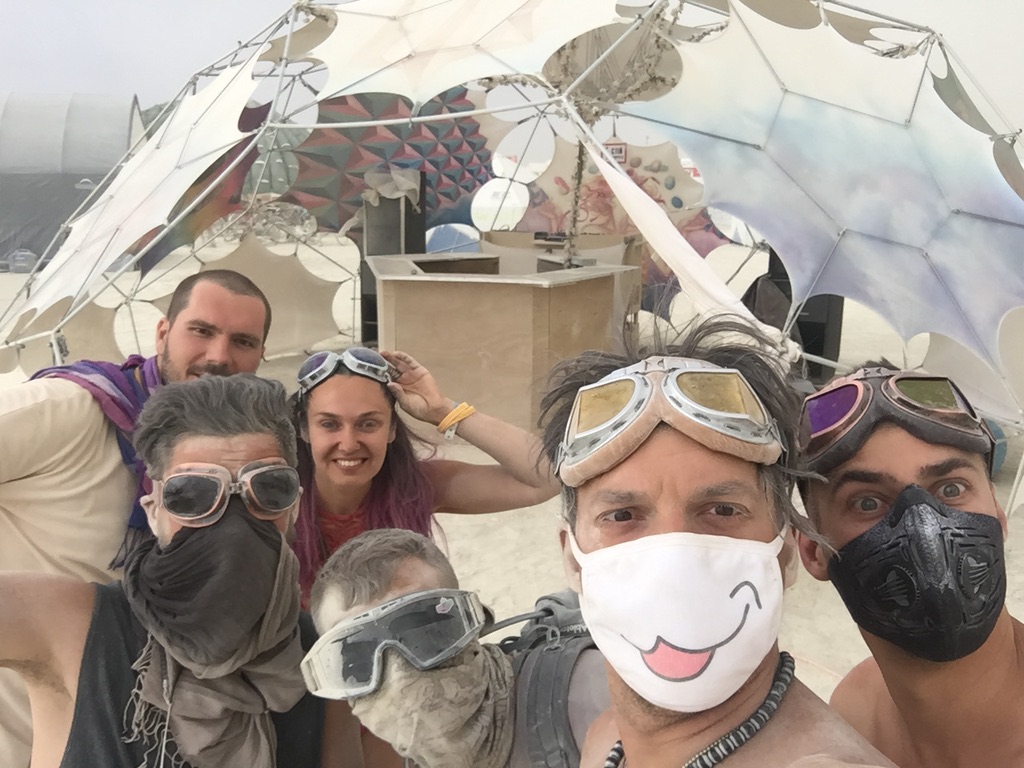
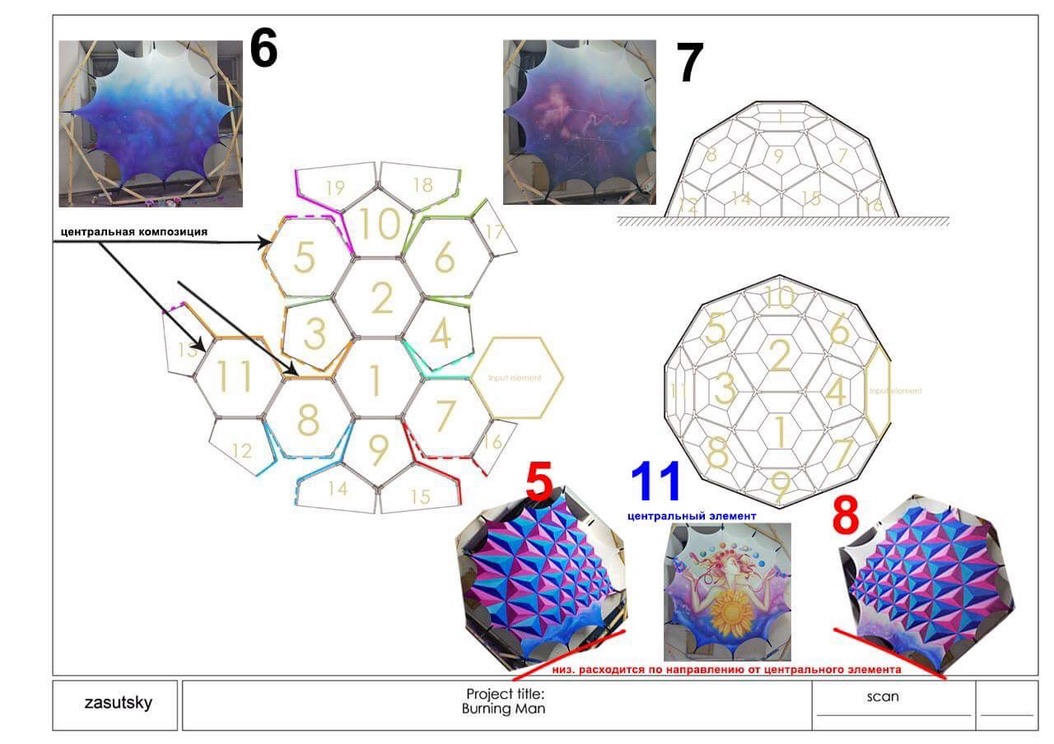
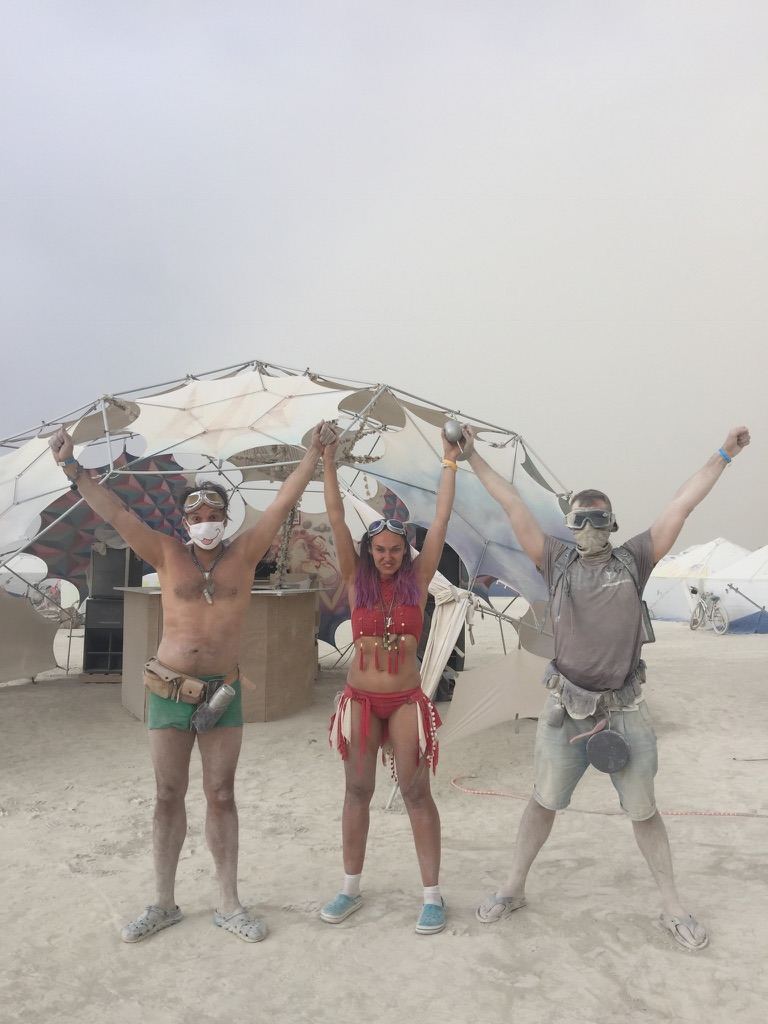
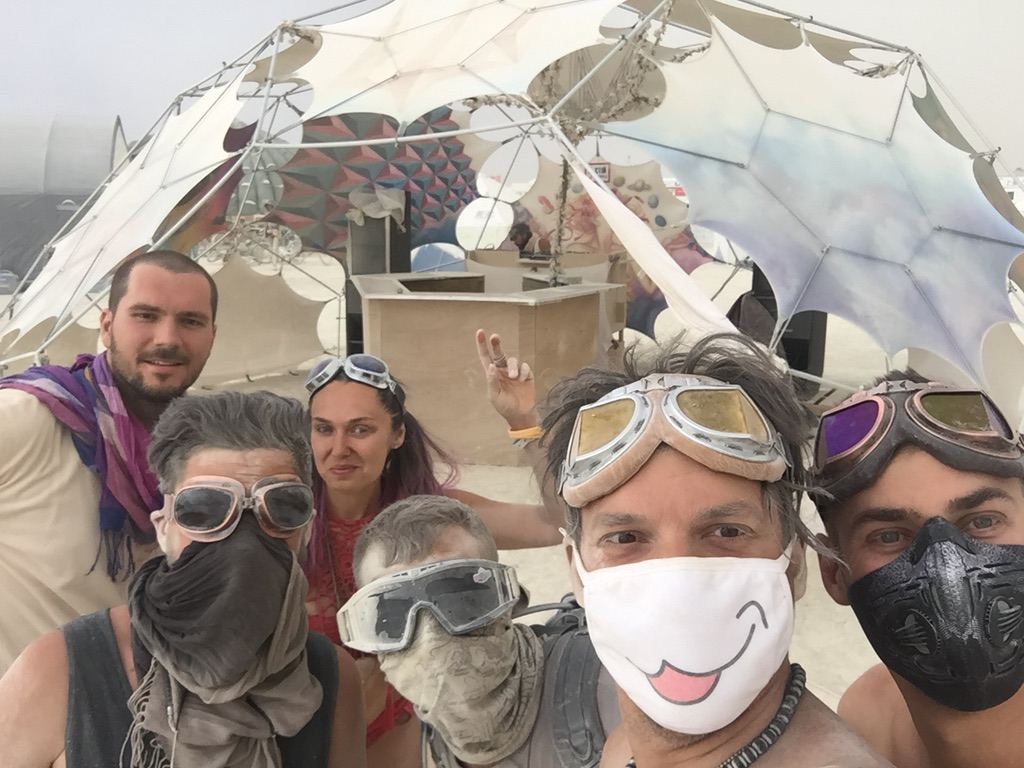
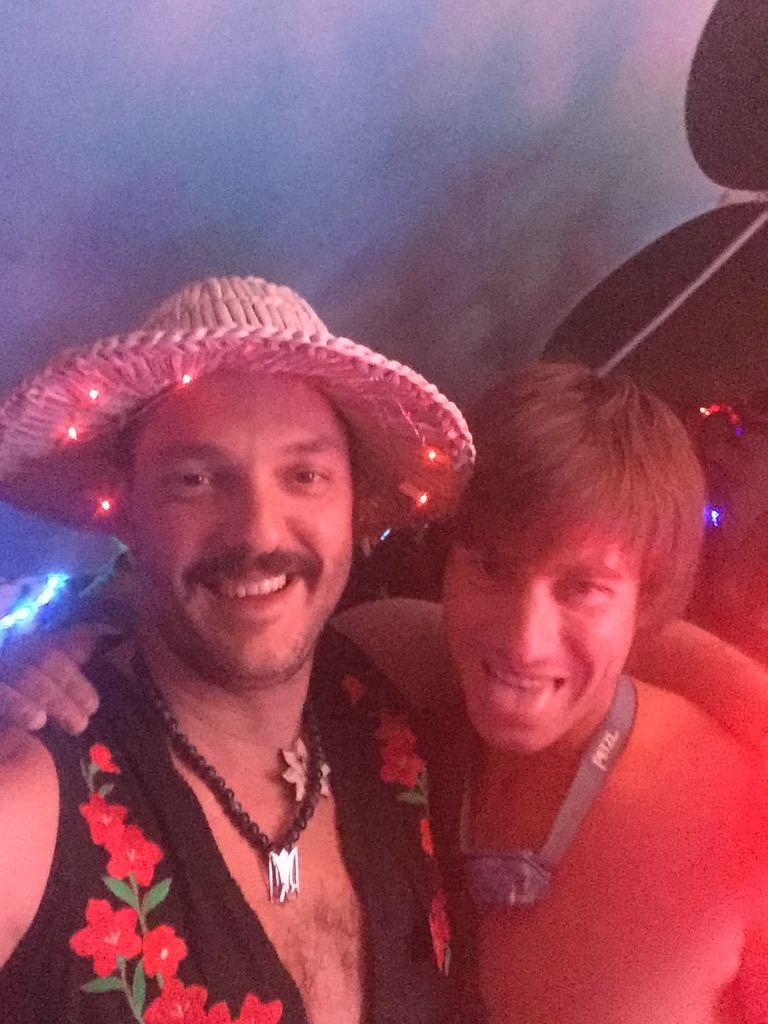
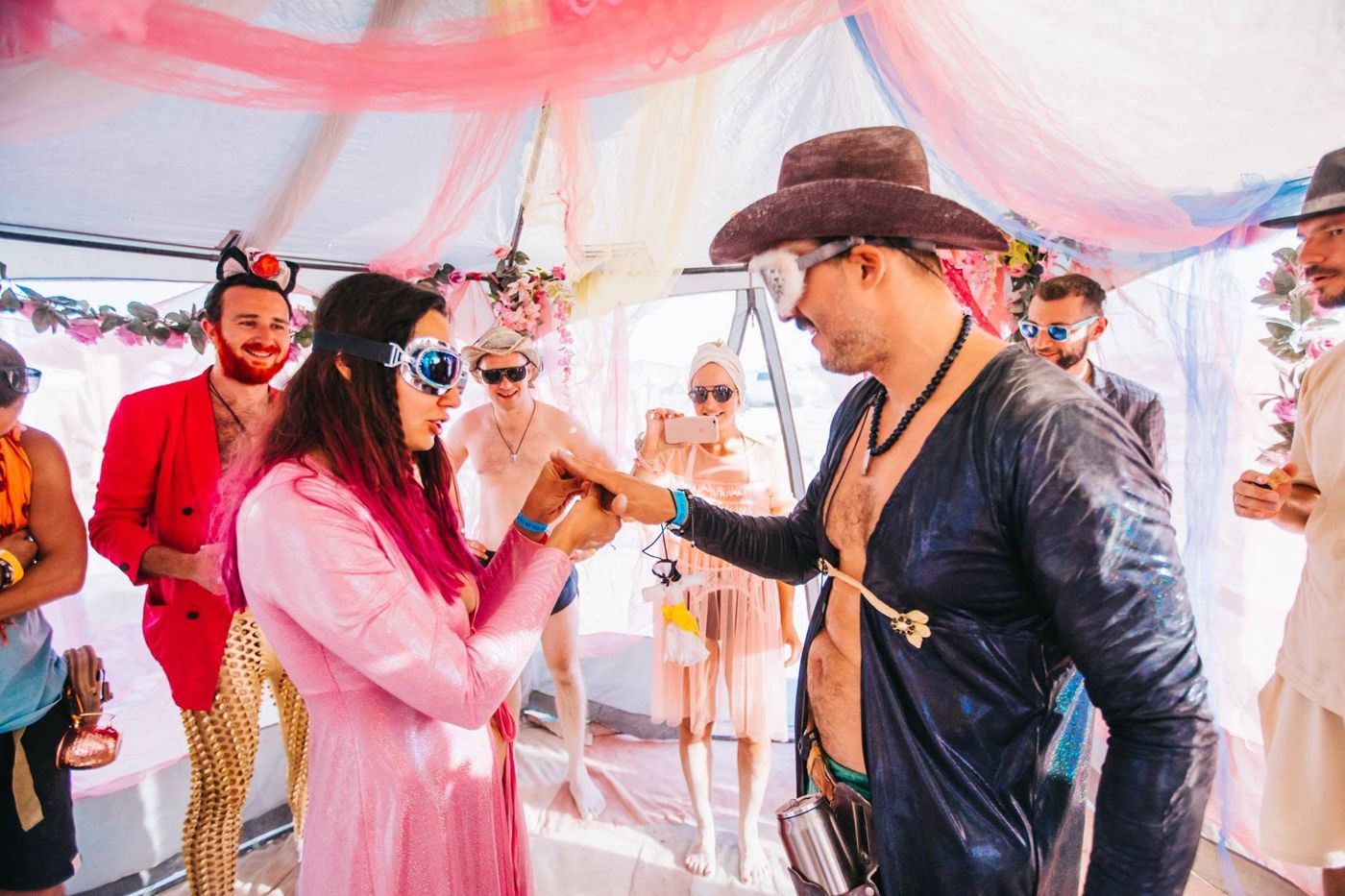
“When the bar was finished, Ella and I stood inside it and hugged. We had both seen it: what we imagined had come true.”
160 litres, salo and a cucumber
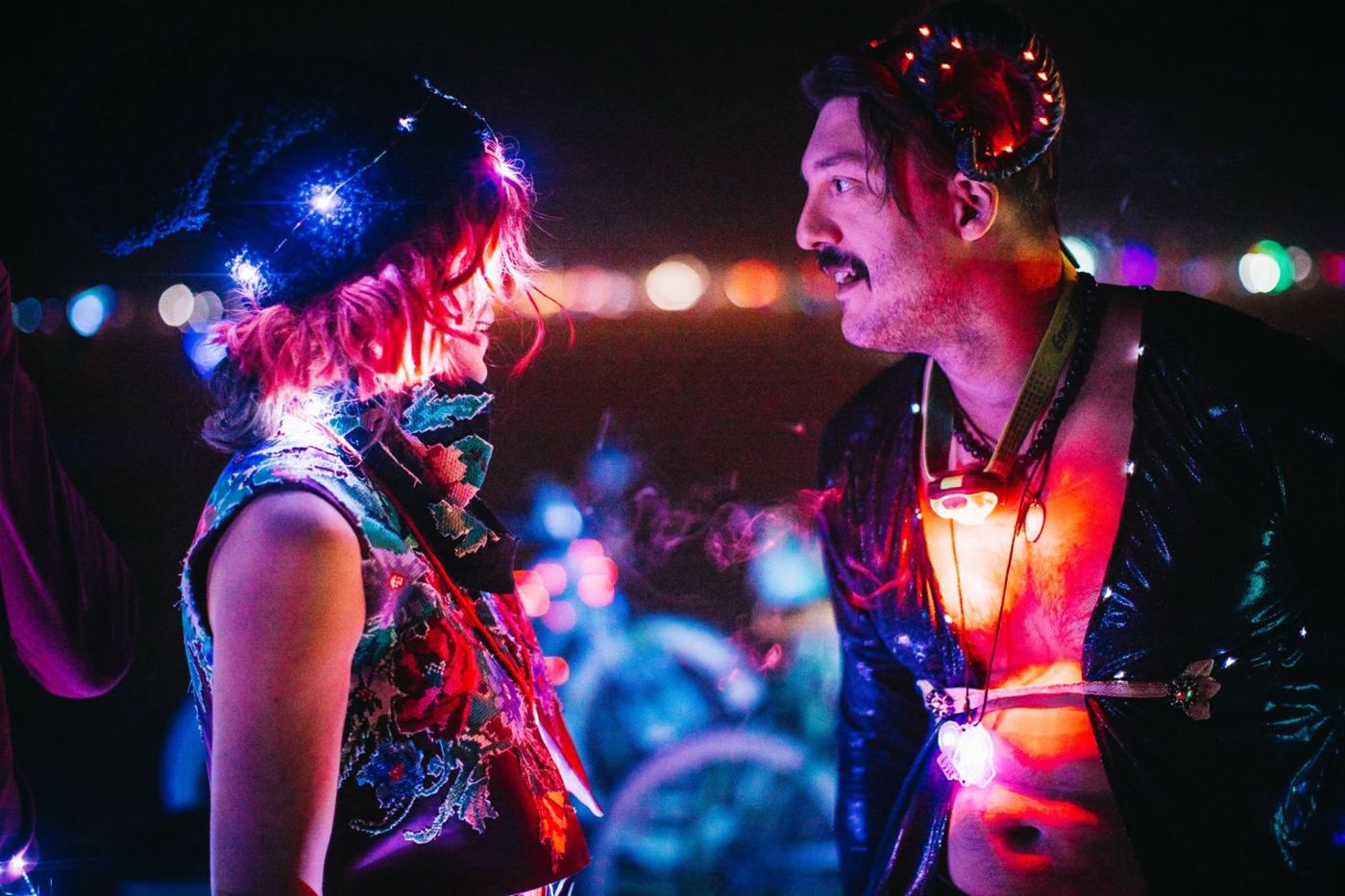
The drinks were Yaro’s own. He distilled samohon in Kyiv and turned it into absinthe, kalganivka, khrinovukha with horseradish, rosehip, ginger, lemon and cherry nastoyky. Every camper carried two litre bottles across the ocean.
Picture the desert at noon, and someone pours you 50–60% nastoyka with a slice of salo and a pickled cucumber on the side. People were shocked, then delighted. The kompot disappeared much faster.
The horseradish one caused the biggest stir. “Horseradish and vodka? It’s freaking genius!” was the verdict Americans kept repeating at the bar.
Sixty people and no water
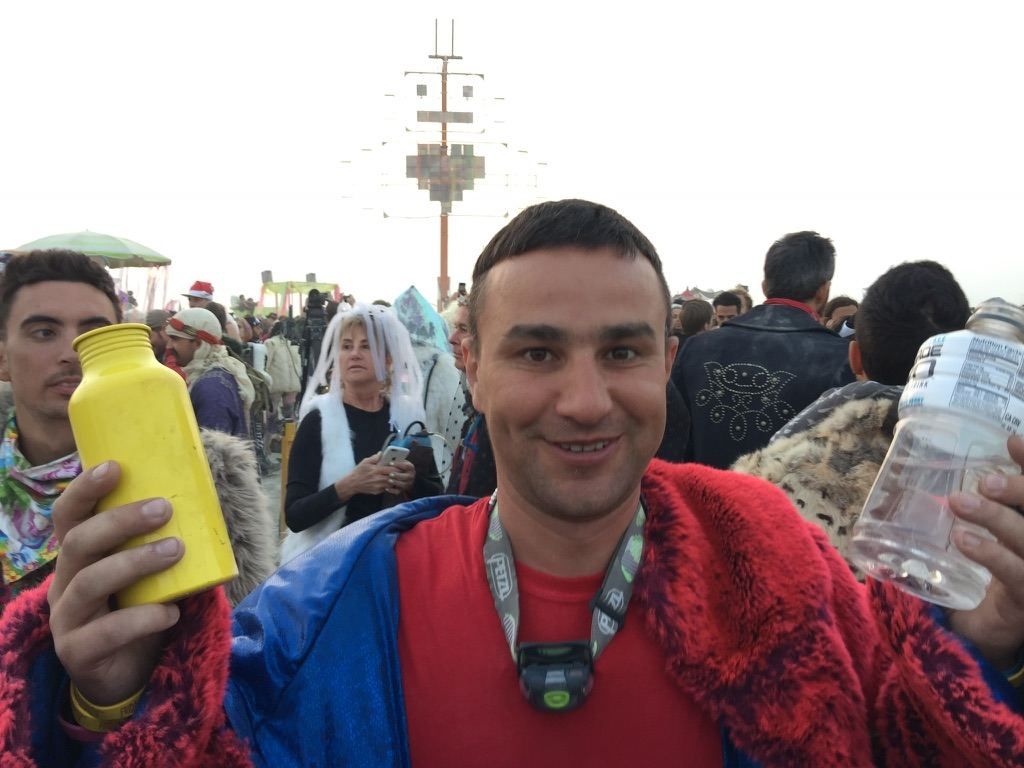
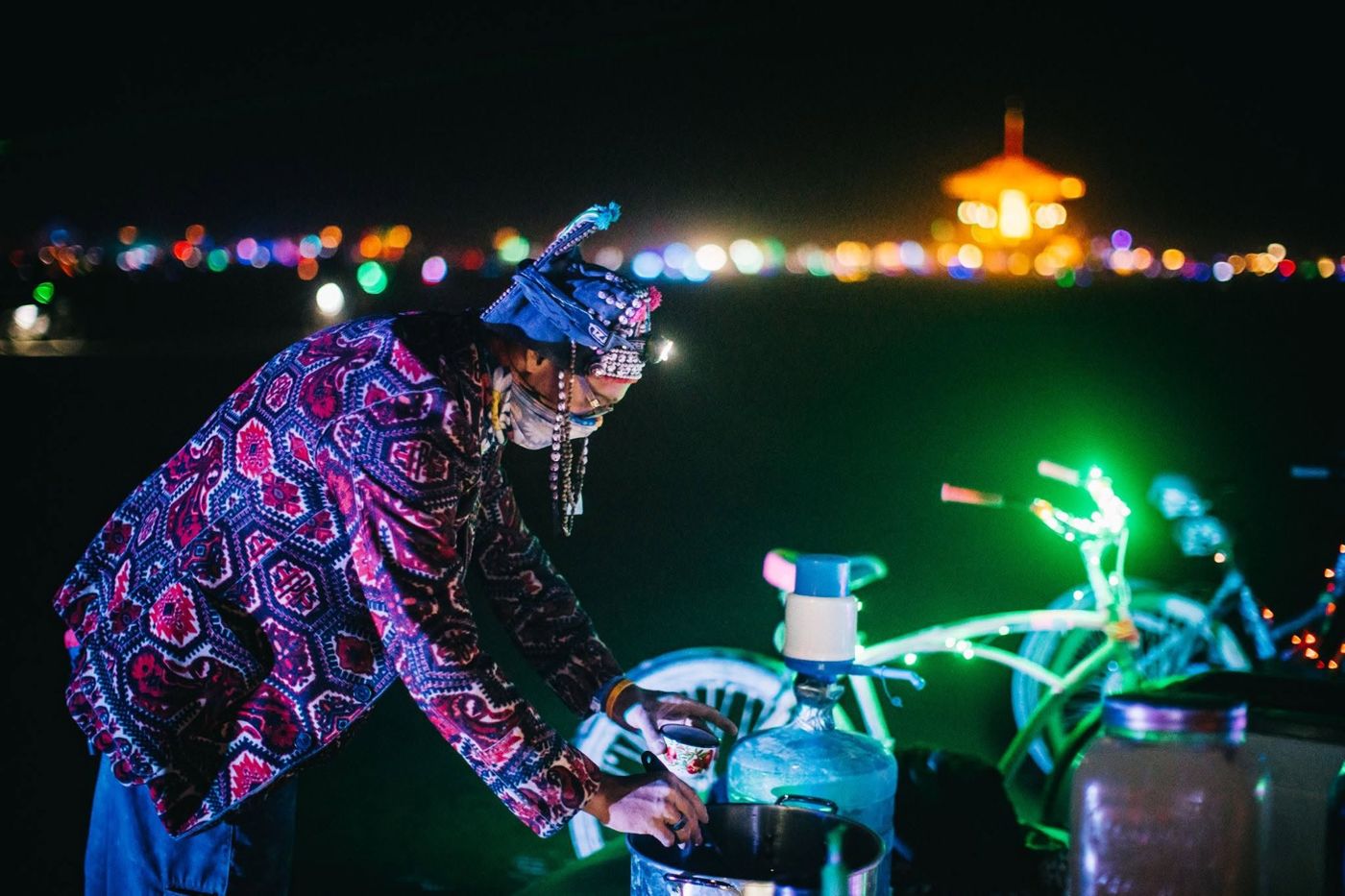
The most stressful moment of the first year had nothing to do with art. Sixty campers were already on the playa, the camp needed about 300 litres of drinking water a day, a 1,500-litre tank stood empty, and the contractor who was supposed to fill it had been “on his way” for three days with no phone signal. A neighbouring camp with a big reserve shared its water and saved the day.
Inspectors came every day: placement, fire safety, the Burning Man org checking the workshops, and undercover checks that the bar never poured for anyone under 21. Kurenivka passed them all. Kurenivka stood on one of the city’s main streets, a camp of about 2,700 square metres, and every camper worked two shifts. Its Zdorovenki Buli party made the official event guide, with techno by Midi8 and then a set by Vlad Fisun, and one night the camp was even allowed to build its bar right under the Man.
By the camp’s own count about a thousand people came through in a week, some three hundred of them Ukrainians who had travelled to Burning Man from all over the world. Some had found the camp on the map; others simply rode past and saw KURENIVKA written on the trailer.
Female Ritual
Artist Slava Gudenok from Nikopol had tried the piece at home first, as a life-size test model. On the playa he had three days, alone, in heat and wind, to sculpt the figure of a pregnant woman from clay, right in camp: a woman about to give birth, as Ukraine was about to enter a new era. It wasn’t pretty in the glossy sense, and it was made with enormous love. On Friday before Burn Night the camp held its own ritual: the figure was fired on the playa near the Man, with a performance around the flames.
Slava now serves in Ukraine’s air defense, shooting down missiles aimed at civilians.
The art page
Kurenivka camp, Burning Man 2017: the aftermovie
Kurenivka camp is building, 2017
Vozhd cooks dinner, Burning Man 2017
2017, as people told it
“Bringing some of these rituals to a desert on the other side of the planet — isn't that radical?”
“These are the crazy guys from Ukraine. I spent one of the best nights of the festival at their camp.”
“It's not a festival in the usual sense. It's a city that appears for a week in the middle of an exotic desert.”
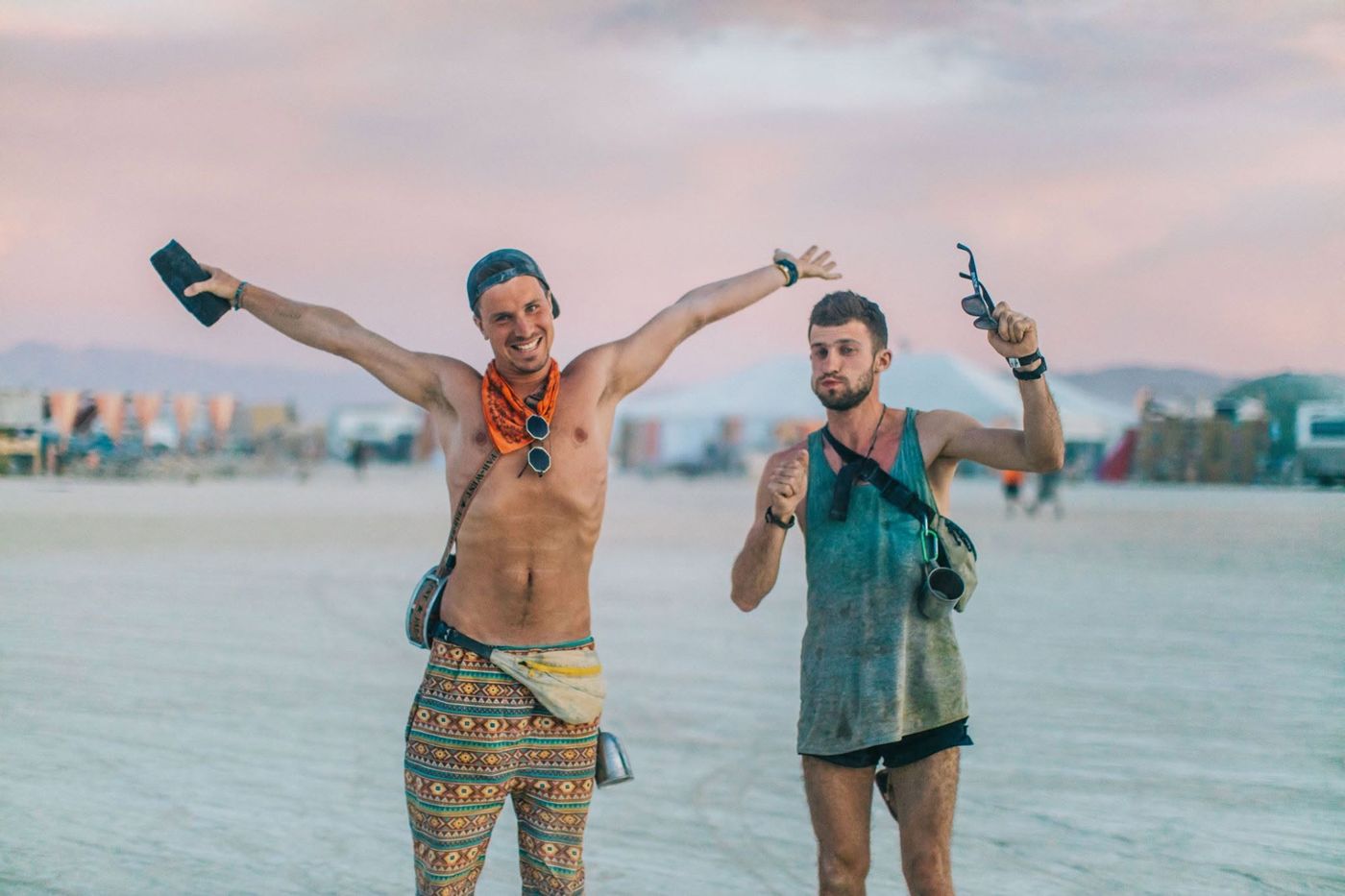
Mamay at Kurenivka, Burning Man 2017.
The 2017 build crew
The people who arrived first and left last.
- Yaroslav Korets
- Ella Vasilevskaya
- Yaroslav Diakiv (Mamay)
- Oleksii Novikov
- Sasha Ovsianko
- Ros Rusakov
- Pasha Veselov
Were you here in 2017?
New names appear after a quick check by the camp.
- Aleksandr Kostromin
- Aleksandr Kurinnyy
- Aleksandr Piterman
- Alexey Prohorov
- Andrey Bozhok
- Andrey Gusarov
- Andrey Khorsev
- Andrey Kolodyuk
- Andrey Stetsovskiy
- Anna Didenko
- Anton Fomin
- David Dubnitskiy
- Demchuk Sasha
- Denis Nevozhay
- Denis Rzhavskiy
- Dima Gavrish
- Dmytro Pavlenko
- Egor Petrov
- Elena Petrosyuk
- Ella Vasilevskaya
- Evgeniya Dankevich
- Gerashchenko Grigoriy
- Igor Shaverskiy
- Inna Perepelitsa
- Ira Fartukh
- Ira Nevozhay
- Katya Lastenko
- Lena Mikunova
- Lena Mironik
- Liza Sukhinina
- Maks Kondratovich
- Maksim Gerbut
- Maksim Tereshchenko
- Marina Kalnaya
- Maryna Goushcha
- Mikhail Zvulun
- Misha Livshits
- Nastya Kolyarova
- Natasha Matyushenko
- Natasha Redich
- Oksana Goshva
- Oksana Oliinyk
- Oleksii Nasedkin
- Oleksii Novikov
- Olga Ivchenko
- Olya Mikhnevich
- Pasha Veselov
- Pavel Vrzhesh
- Ros Rusakov
- Ruslan Tkachenko
- Sasha Baturin
- Sasha Ovsyanko
- Sasha Roman
- Sasha Stepanenko
- Sergey Dankevich
- Sergey Olefrienko
- Sergey Petrus
- Sergey Starostin
- Seva Korneev
- Seva Kukhelnyy
- Shulyak Igor
- Slava Gudenok
- Stas Datskiv
- Stas Ostrenko
- Tagir Sultanov
- Taras Savchuk
- Ulyana Onishchuk
- Vadim Avseyushkin
- Valya Zasutskaya
- Vasya Slivka
- Vasya Slobodyan
- Vika Denisyuk
- Vika Gizhirova
- Vitalika Vuyler
- Vlad Fisun
- Vova Yudashkin
- Yana Ilnitskaya
- Yaroslav Azhnyuk
- Yaroslav Diakiv (Mamay)
- Yaroslav Korets
- Yuliya Kisel
- Yulya Gerbut
- Yura Progonnyy
- Zhenya Pustovit
- Zhenya Rozenfeld
- Zhenya Zasutskiy
More from 2017
2017 in the press
-
23 Jun 2020
-
15 Feb 2019
-
19 Sept 2017
-
13 Sept 2017
Kurenivka — a Ukrainian eco-town in the American desert at Burning Man
No longer online
-
13 Sept 2017